One College Many Stories
The Educators for Equity, Diversity, and Cultural Consciousness (EEDCC) presents a student-centered conversation event designed to strengthen understanding, collaboration, and action across the Palomar community.
Overview
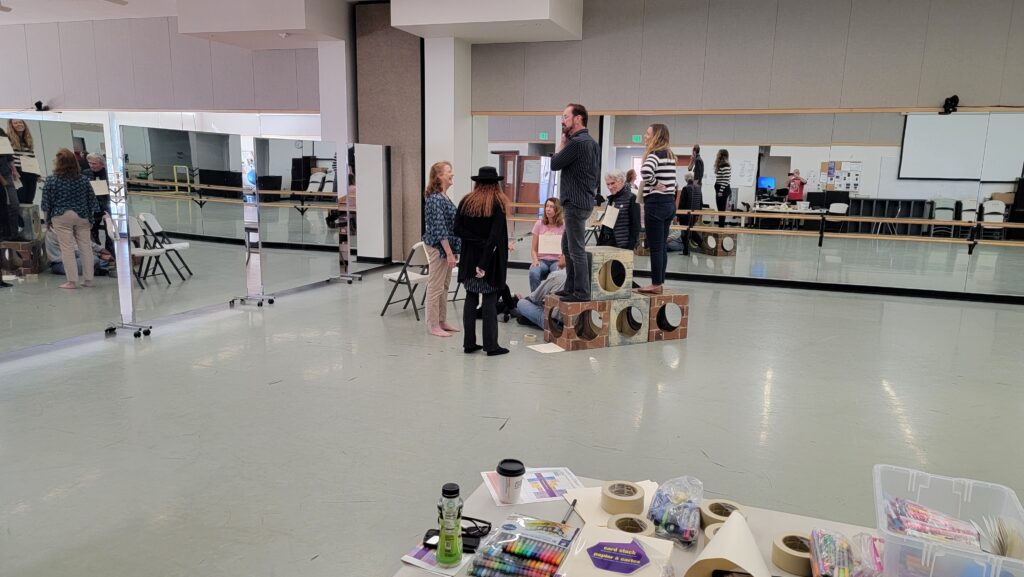
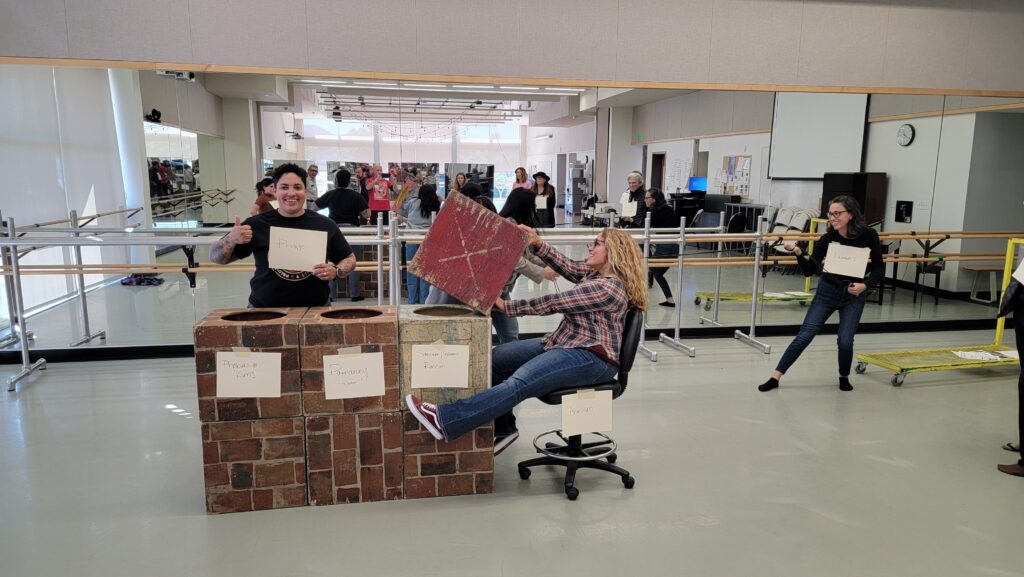
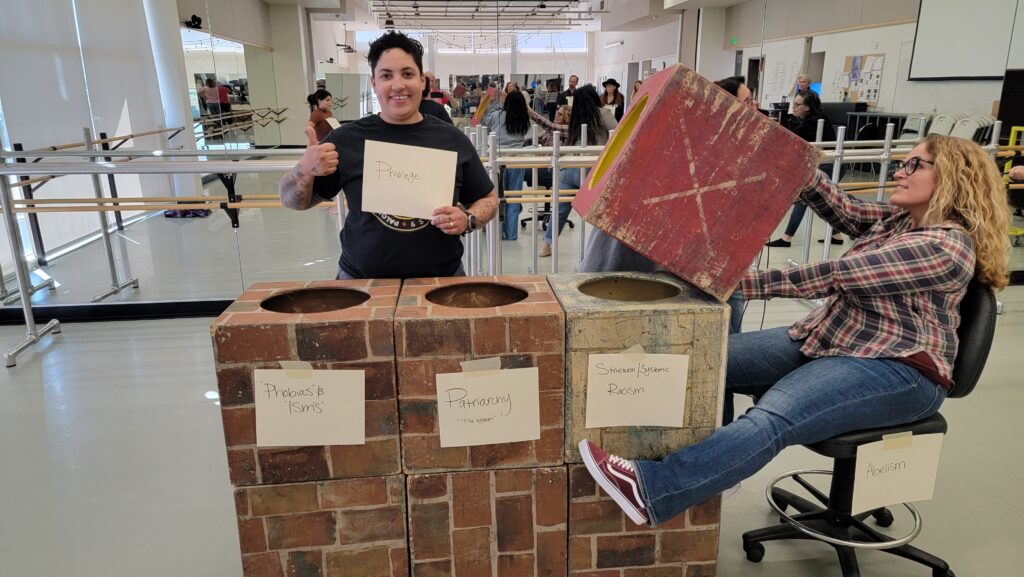
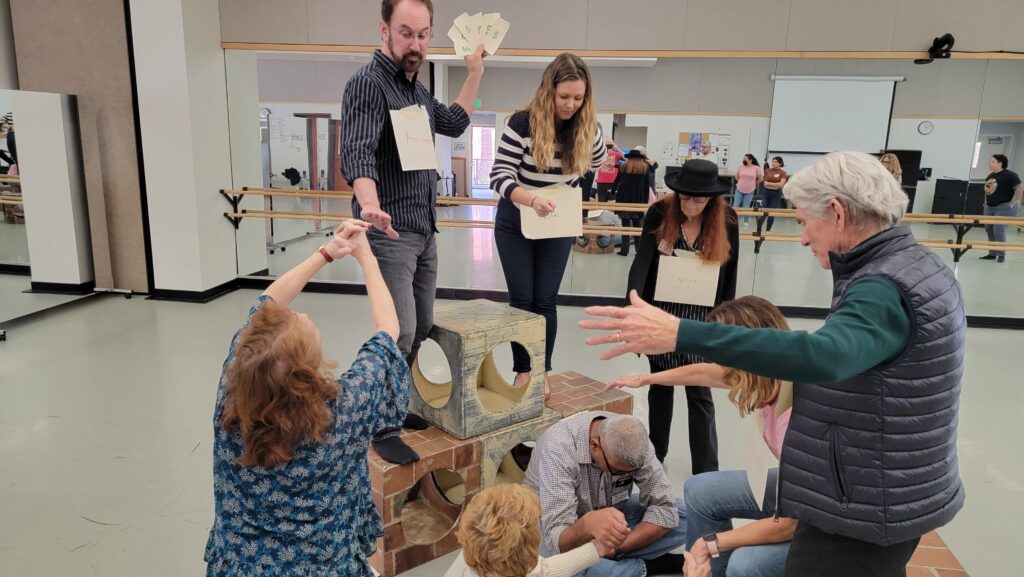
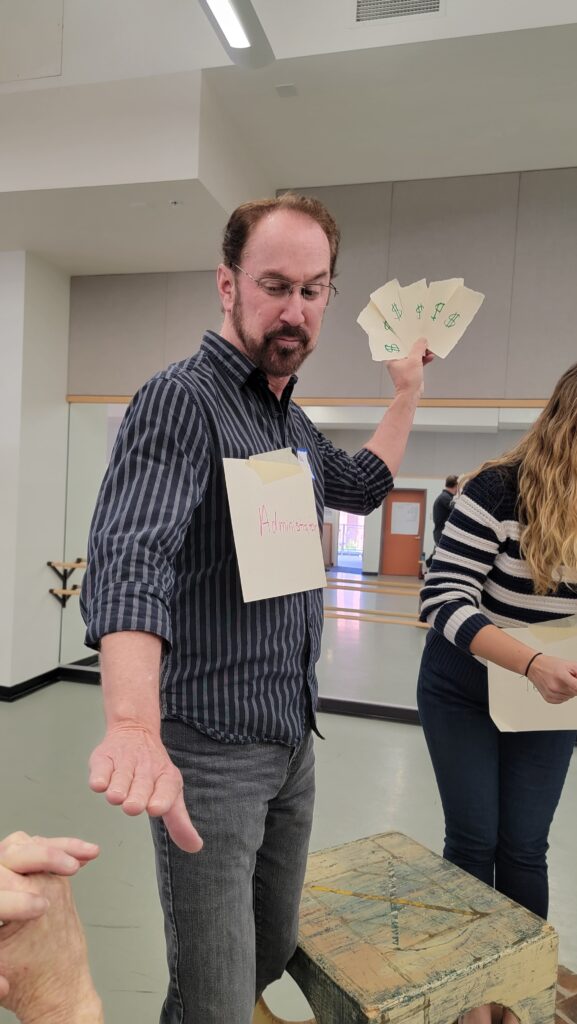
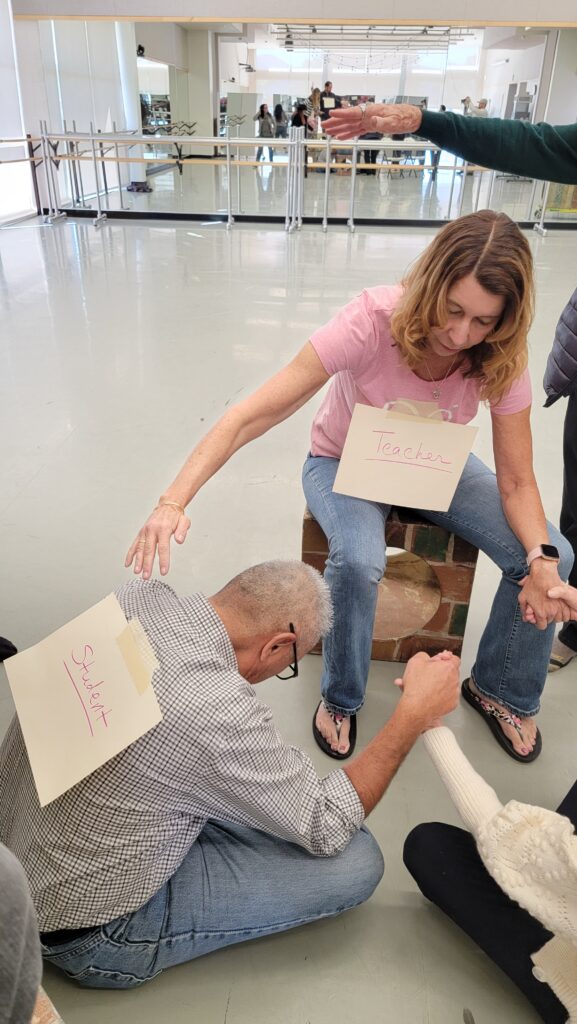
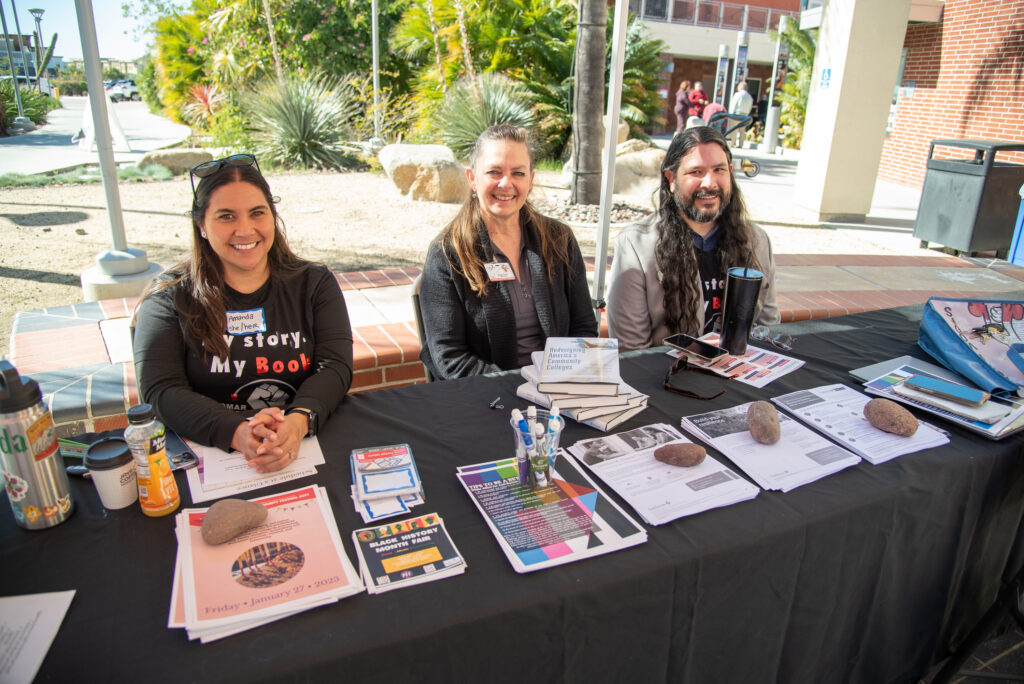
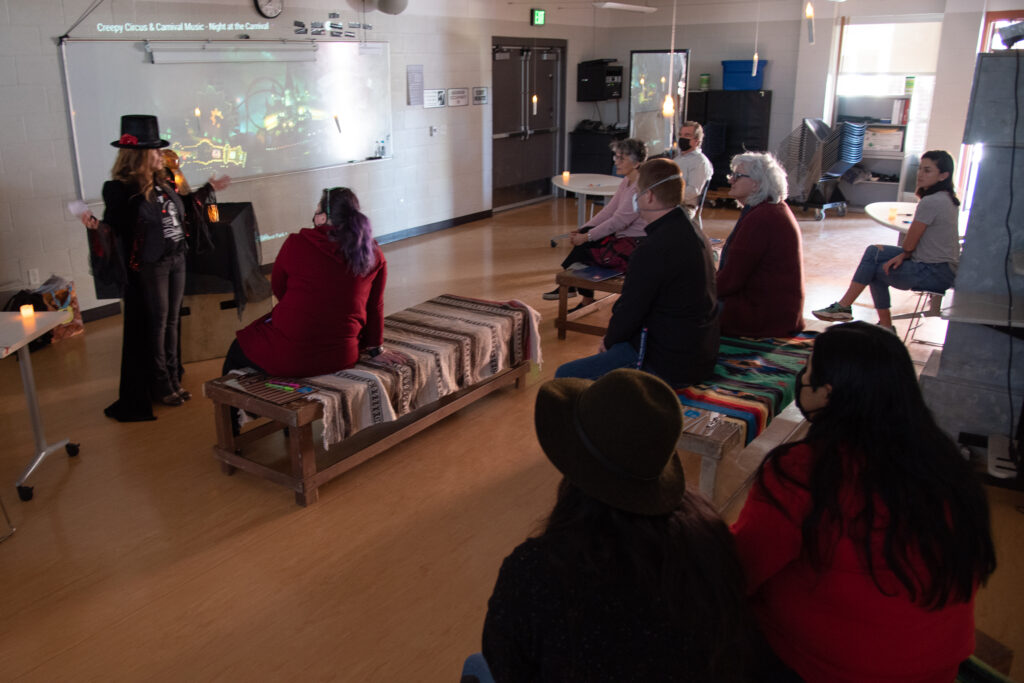
One College Many Stories, held on Friday, January 23, 2026 from 10:00 AM to 3:00 PM, was designed to center student voices and foster meaningful dialogue across the Palomar College community. The morning began with a grounding session featuring Umoja students, followed by attendees dividing into mixed constituent groups to participate in Story Circles where student experiences served as the foundation for discussion. Participants then moved into Pattern Harvesting, collaboratively identifying themes emerging from the stories they heard. Over lunch, table facilitators condensed the themes that emerged in the pattern harvesting into a Living Pattern Wall. Attendees then explored the Living Pattern Wall and selected a pattern cluster to carry into the afternoon. The afternoon sessions invited participants to examine how those patterns show up in their own work. The day closed with reflection, where attendees shared what stayed with them, what felt unresolved, and what they planned to change.
How We Devised the Structure
We began the process of devising this year’s Winter Flex-week event by surveying the community to understand their needs and by reviewing our mission and aligning the goals of the event with our mission. We identified two key statements in our mission to guide the process:
- We will listen, educate, and take action to create and engage equity and belonging throughout the college’s systems and practices
- We engage the college community with programs and tools for the college to build and sustain equitable educational systems that create a college-wide sense of belonging for all students and educators to thrive.
We began by using the Mural collaborative tool to identify and articulate the problems or concerns that we hope to address. Here is a sample:
- How to celebrate diversity, while also making everyone feel welcomed?
- Many faculty are not adept at engaging students
- Many faculty still resistant to concepts like implicit bias
- Many PT faculty do not have a sense of belonging here.
- Many faculty and disciplines are still steeped in old pedagogies rooted in Eurocentric supremacist traditions
- Faculty are out of touch with the student experience and current culture – Social Media etc.
- Many students do not have a sense of belonging here.
- Low morale amongst community esp. in relation to deletion of BP 3000
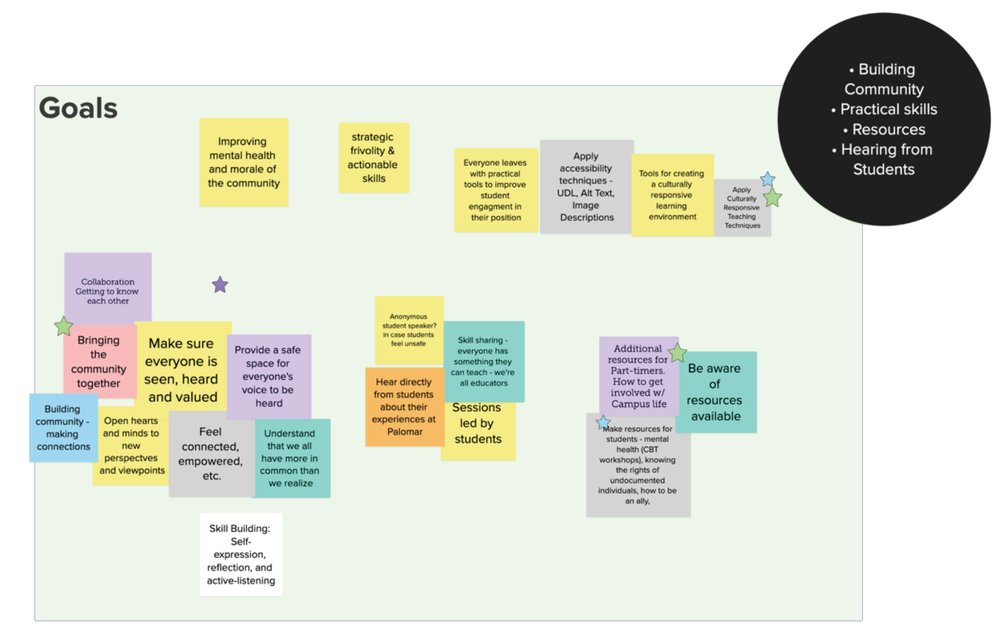
Based on the identified concerns we brainstormed goals and grouped them into common clusters. (See Figure 1)
From the cluster of goals we developed the theme and title of the event: One College, Many Stories: Creating A Culturally Responsive Community For Learning.
From this work three key structural priorities surfaced:
- Keep the entire group together for a unified experience instead of a multi-session conference model.
- Center the event on student stories as the primary research and source for identifying the specific issues to be addressed by the process.
- Creating opportunities for direct human connection and community building.
The next step was researching existing models for large group collaborative problem solving processes that could be useful for our goals. Several models influenced the structure:
- Open Space Technology
- World Café
- Design Spring (One Day Remix)
- Technology of Participation Consensus Workshop
Using elements from these models we created and refined the event flow, finally arriving at the following:
- → Introduction: Shared framing and context-setting.
- → Story Circles: Student Reality – Tables with 10 participants including a table facilitator and at least one student storyteller. Focus on listening to student stories and then follow-up questions, clarifications, etc.
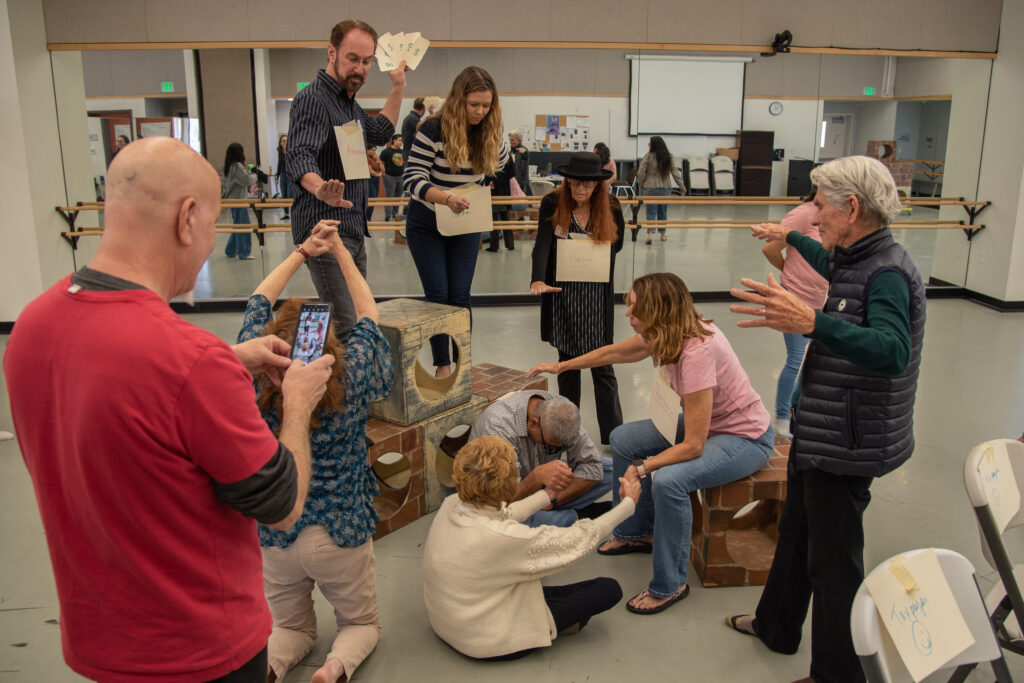
- → Pattern Harvesting: At the same tables, a series of conversations in varying talk structures to identify what patterns or topics emerge from the student stories.
- → Living Pattern Wall: (During lunch break)
- Table facilitators quickly share the patterns that emerged in their table and create pattern clusters that share the same or related themes.
- Participants view the pattern wall and decide on a pattern cluster to focus on in the afternoon session.
- → Analysis: Tables organized by the topic of the pattern cluster, including participants from all constituent groups, follow a facilitated process to
- Define the concern raised by the pattern cluster in clear and actionable language
- Imagine solutions to the concern
- → Synthesis: Participants re-group by constituency and share thoughts on how they can address these changes
- In their own daily work and interactions with students
- To be a change agent in their own domain
- To be a change agent in the college-wide system
- → Closing: Final reflection.
The final step was to detail each phase of the structure with specific prompts for each segment of the event flow that would generate the focused and productive engagement we hoped for. Along with this report, we are providing a copy of the workbook we created for the participants.
Morning Segment
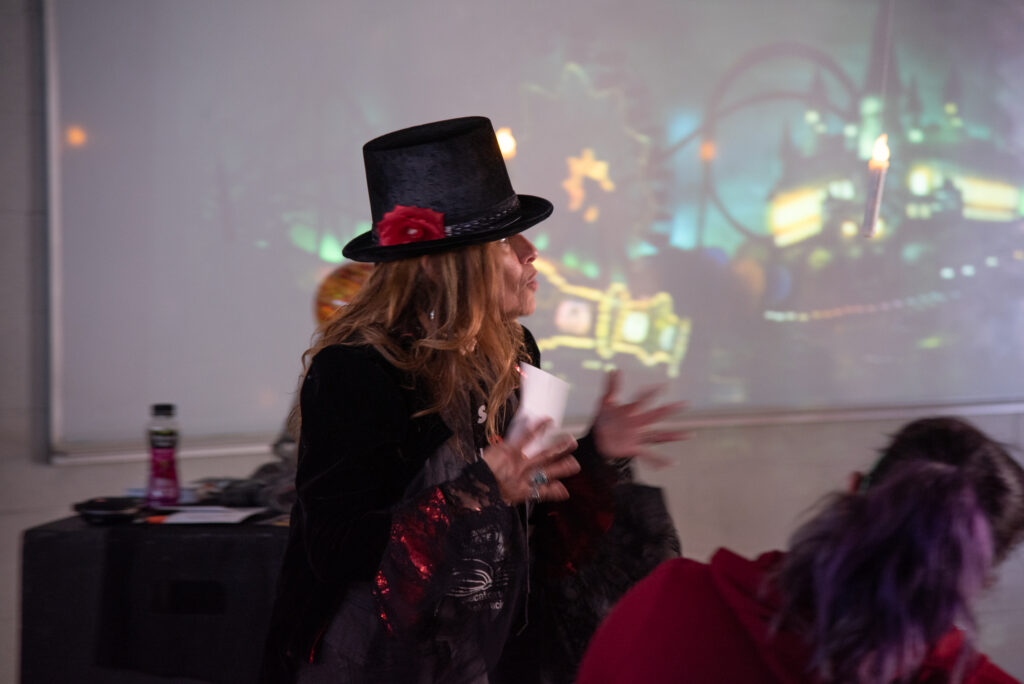
The opening and morning session were Umoja student led. Umoja students guided us through their community agreements and practices. After a personal reflection activity on what Umoja students presented, students joined small groups with faculty and shared their experiences as students at Palomar College.
Committee members facilitated small groups, but student voices were centered throughout the discussions that came up. This prompted important conversations about building connections and rapport with students, and what support services have helped Umoja students who shared their experiences and perspective. These conversations led to establishing patterns and topics for further discussion in the afternoon session.
Five Challenge Areas Emerged from the Pattern Harvesting
Through the personal reflection activity and the sharing of student experiences, participants identified patterns in discussion which helped produce a list of 5 challenge areas: Accessibility, Mentoring, Power in Community, Uncertainty, and Perceptions of Community College. These areas were later condensed down into: Community, Resources and Access for Students, and Mentoring.
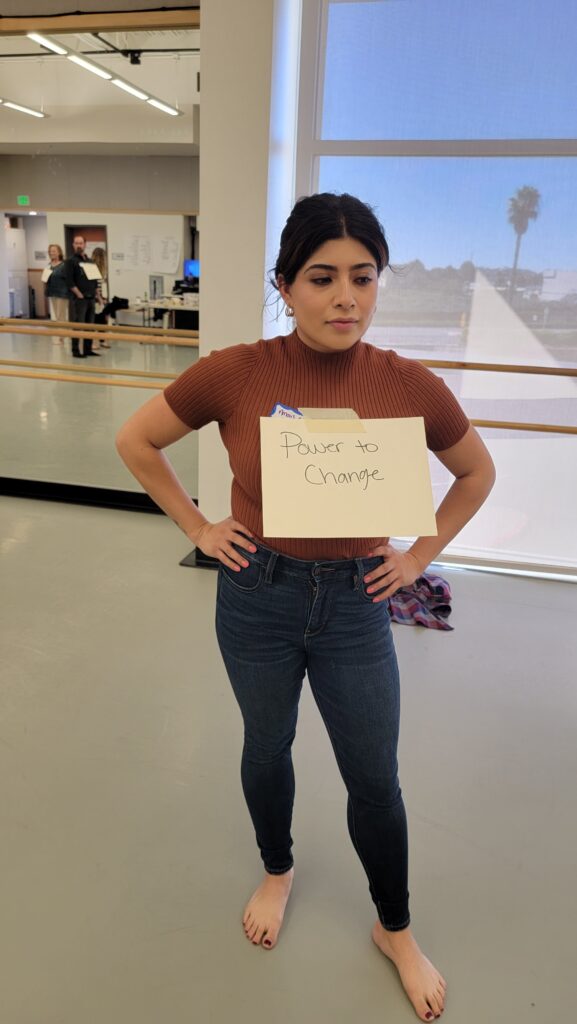
Power in Community:
The topic Power in Community was discovered through conversations on sharing student group contacts, finding your “village,” the importance of belonging and the fears of the loneliness epidemic, and in breaking stereotypes by showing that students are not in this alone.Accessibility:
Student reflections on affordability, student resources, mindfulness of student workload, and opportunities for success where faculty and staff support students, led us to our first challenge area.Uncertainty:
The topic of uncertainty was discussed in conversations about self-doubt and cultivating confidence, self-imposed limitations as barriers to success, and systemic gaps in higher education.Mentoring:
Reflections on the value of all experiences, focusing on spreading the importance of community, student mentors, and the boiling pot analogy of horizontal leadership, brought us to our next challenge.Perceptions of Community College:
This ties closely together with, but is considered separate from, Perceptions of Community College, which were identified in student expressions of the stigma of attending a community college as not being successful and in rebranding those perceptions.Power in Community
One clear pattern that emerged from the stories was related to the students’ early experiences at the college. Students described how they felt isolated, lonely, overwhelmed, lost, and often considered dropping out until they discovered a community that created a sense of belonging for them. Even then, as they established a connection to that specific group (e.g. Umoja), they often did not feel a connection to the college as a whole. It was also noted that students struggled to find the resources they needed to succeed and didn’t even know where to start. It was particularly noted that students who do not come from a family culture of higher education often feel like outsiders.
Several suggestions emerged from our discussion:
- An authentic, in-person orientation for new students where they have human contact with peers and college employees.
- Robust peer mentorship program
- Simplified enrollment process
- Expand and support affinity groups and student interest groups
- Public cultural art on campus that welcomes the diverse elements of our community
Resources and Access for Students
Our group consisted of a faculty member and three students. We discussed available resources and barriers to accessing them. We found that most of the resources students expressed a need for are already offered by Palomar, but access to them is limited. We explored the need for improved website navigation, consistency of information, and academic counselling. Students also mentioned an interest in having resources communicated in different forms, such as physical handouts and online. We discussed ways to make resources more obvious and approachable, such as providing access to the resources via Canvas and inviting speakers who offer resources to share about them in class.
Mentoring

In the afternoon session, participants discussed the importance of mentorship and its positive impact on faculty experiences as students, as well as its role in fostering meaningful connections with students. Both faculty and students emphasized that mentorship is a key mechanism for building trust, engagement, and a sense of belonging. Students shared practical suggestions for how faculty can build connections and establish rapport, highlighting the importance of approachability and consistent communication. A recurring theme was the need for faculty to remain accessible by “keeping the door open,” both literally and figuratively, so students feel welcomed and supported in seeking guidance.
One faculty member characterized mentorship as a “one-way street” from mentor to mentee, noting that while mentees may not offer direct or immediate returns, the value of mentorship lies in supporting student growth and development. This perspective underscored mentorship as an intentional and service-oriented commitment. Additionally, both students and faculty identified a need for more structured training for mentors. Participants suggested that training could help faculty and students develop effective mentoring strategies, better understand student needs, and build confidence in forming supportive, impactful relationships.
Feedback Survey
Summary of Results
Based on the survey responses for the One College Many Stories 2026 Feedback Form, the event was highly successful, with participants finding significant value in the student-led stories and organized format.
Key Takeaways
- High participant satisfaction: the event received an average value rating of 9.44 out of 10.
- Valuable student perspectives: qualitative feedback consistently highlighted the impact of hearing student testimonies and stories, which participants found “meaningful” and “informative.”
Feedback Themes
What was liked most:
- Student stories: many noted that the unique perspectives shared by students about their experiences at Palomar were the highlight.
- Community and connection: the opportunity to connect with passionate colleagues and students in a dedicated space (like LRC-438) was highly valued.
Suggested changes:
- Inclusivity: some suggested inviting even more students to participate to further enrich the dialogue.
- Support: one respondent mentioned a desire for more institutional support for such initiatives.
- Time: one participant expressed a wish to have had the time to attend both sessions.
Scan the QR code below to see the full results
Recommendations
The afternoon sessions revealed some specific action plan recommendations, including:
- Resources and Access for Students: invite resource representatives to talk in class rather than expect students to attend resource fairs during welcome week. Possibly have prerecorded info guides integrated into Canvas shells.
- An authentic, in-person orientation for new students where they have human contact with peers and college employees.
- Robust peer mentorship program
- Simplified enrollment process
- Expand and support affinity groups and student interest groups
- Public cultural art on campus that welcomes the diverse elements of our community
We believe this is a unique and innovative model for doing authentic, student-centered equity work at community colleges, and we see the potential to develop this model for other community colleges to use.
Future Steps
While attendance for the 2026 One College Many Stories EduFest was less than capacity, feedback confirmed that the event was nevertheless successful in creating meaningful connections for students, staff, faculty, and administrators. As a result, EEDCC concluded that this format and approach is one to keep and develop to improve future events. Recommendations for next year’s event focus on better promotion, higher student recruitment, and preparing earlier.
- Improve follow-up with students and orientation for students. In Fall 2026, we will improve event promotion with specific dates for student involvement, such as an initial date for students to express their participation interest, a student meetup event with mentor opportunities (pairing new story-sharing students with participants from last year), and an orientation that will include a rehearsal of the event. The committee will focus on creating a welcoming, safe space, with consistent communication for students to share their stories.
- In addition to improving ways to prepare students for sharing their stories, EEDCC will also work to find meaningful compensation for participating students. The committee also plans to provide swag, such as shirts for students to wear during the event.
- More deliberate preparation for student storytellers (offer some incentives to participate?)
- Continued collaboration with Umoja
- Meaningful compensation for students
- Shift the date of the event to earlier in FLEX week to try to encourage more participation
- Adding different student panels addressing different topics (e.g. administration, registration process, support groups, college services, classes, instruction methods, etc.)
About EEDCC & Committee
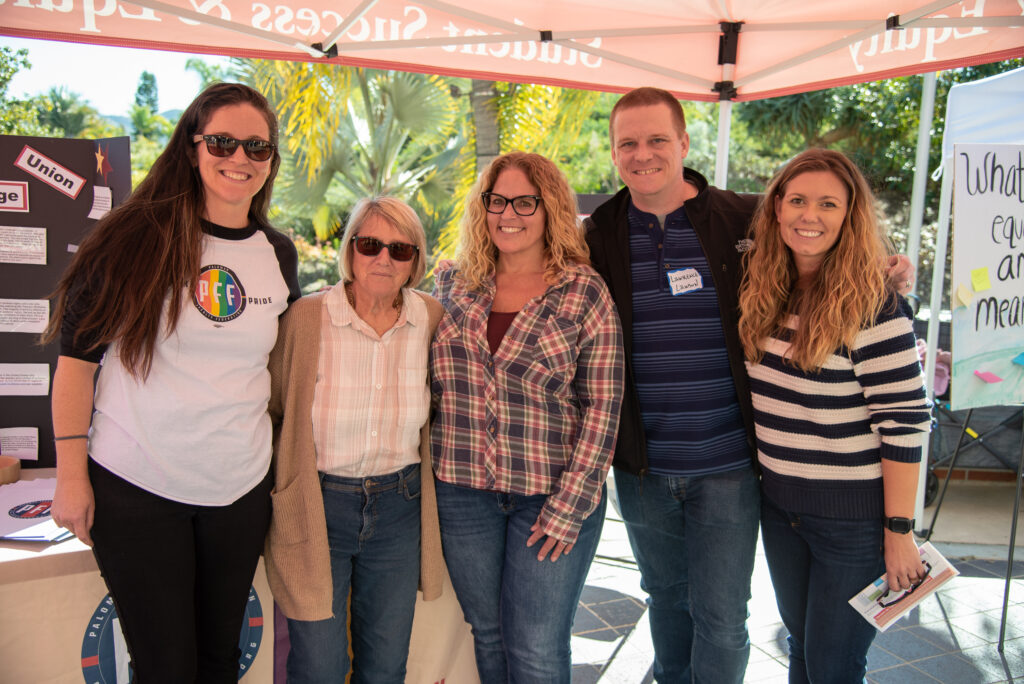
As culturally conscious and responsive educators, we promote and infuse diversity, equity, inclusion, accessibility, and anti-racism for all members of the Palomar College Community. We will listen, educate, and take action to create and engage equity and belonging throughout the college’s systems and practices.
We envision Palomar College as a vibrant community of educators and learners where all members are valued for the unique context and lived experiences they bring to the community. We recognize the harmful past practices in society at large and within our college that have created inequities for our students.
We engage the college community with programs and tools for the college to build and sustain equitable educational systems that create a college-wide sense of belonging for all students and educators to thrive.
Committee Members
- Fabi Alejandre (CCE)
- Alia Barkzi (ESL)
- Henry Cen (Biology)
- Krista Carraway (ESL)
- Marcela Gamez (Languages & Literature)
- Michael Mufson – Co-chair (Performing Arts)
- Chris Norcross (CCE)
- Laura Padilla (Ethnic Studies)
- Briana Stanley – Co-chair (Art)