
A short story about how I should have done more to stand up for my African American best friend in our childhood while living in a white community.
History wants to tell us that we’re different. But that’s the furthest thing from the truth. This poem details the experience of Black Americans in the past and present .
A Short Essay on Race Written to White People, from A White Woman
A letter to white people for understanding.
3 written Haikus
Expresses feelings toward confederate statues in the south.
A short essay about the death of reservations.
A poem in haiku pentameter, exploring the idea of two races trading places in presentation, lifestyle and emotion.
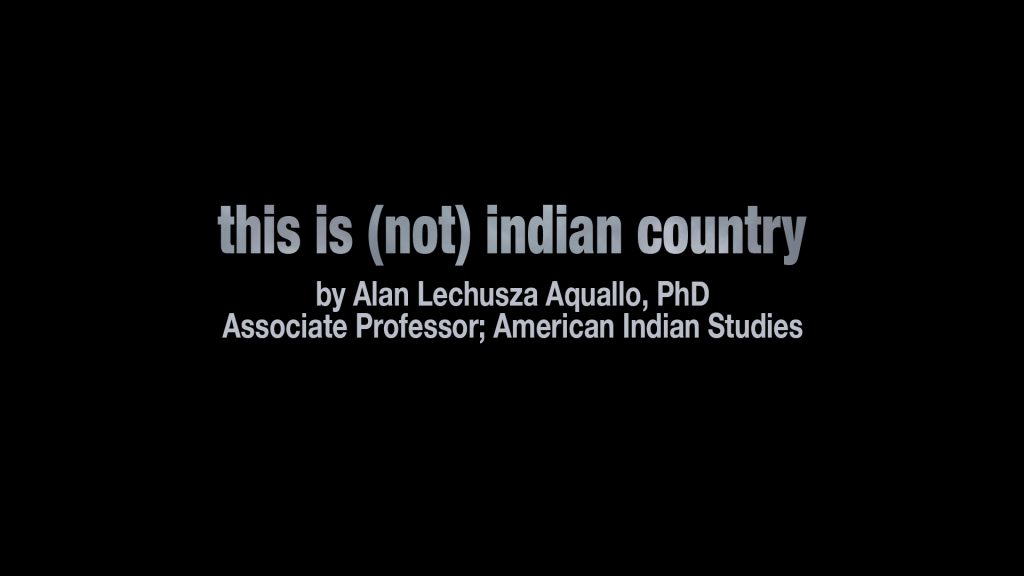
A Multi-Media work by Alan Lechusza Aquallo, PhD, Associate Professor; American Indian Studies. This work melds images, text and music to create powerful and profound explorations/articulations of NDN (Indian) identity and positionality. profound.
I chose to write and read a poem about the monument of Nathan Bedford Forrest.

Click on the image below to visit the response wall for this gallery
A Short Story About a Lifetime of Injustice

by Jessica Neyhouse

I grew up in a predominantly white community and, being white myself, honestly, I never really saw many issues with the community’s attitudes toward people of color. However, my best friend of twelve years, an African American girl, opened my eyes to many of the issues that she herself had been facing her entire life. I genuinely had no idea that her and others that looked like her were facing such atrocious attitudes toward them and it made me feel ignorant that I had never noticed. I was fifteen at the time. This is my reflection on some of the things that I wish I had noticed sooner.

For purposes of this story and to keep her anonymity, let’s call my best friend Jenna. Like any middle school aged girls, Jenna and I loved taking pictures together wherever we went. Whether it was a selfie or a nice picture of us standing taken by a stranger with the backdrop of the ocean, Jenna would never approve a picture without editing it. I could tell she had to be self-conscious about something, but Jenna was beautiful, and everybody knew it, even without a filter. Years later as I reflect on this experience with Jenna, I realize how frustrated I would get when she took fifteen minutes to post a picture because she needed to make sure that she looked perfect. I also realize that it wasn’t anything about the way that she looked in that specific photo that Jenna was trying to hide. She was trying to lighten the color of her skin. Jenna was editing every photo to make herself lighter because she knew that the only people who were going to see this photo were the white people at our school. Jenna didn’t like standing out like that. I wish I could have noticed this sooner.

Jenna had to face the struggles of feeling like the odd one out in many situations. When we were ages 13 to 16, Jenna lived with my family and me. She would come on vacations, to soccer tournaments, on road trips, to the grocery store, and everywhere else along with us. She was part of our family and nobody inside of our family circle questioned it or saw her as different. Nobody in our family saw her as different than us, so much so that we became numb to the comments that others made about Jenna going everywhere with us. People would call her my “black friend” or “the black sister/daughter in the family”. It certainly made me uncomfortable at the time when people would refer to my best friend by the color of her skin rather than the name that she was given but I will forever wish I would have said something to those people. I wish I would have had the difficult conversations with others in my community rather than let my best friend endure the idea that people might actually only see her as the color of her skin. I wish I could have told her in those moments that I see her as so much more and I wish that I could have made everyone else see her as so much more as well.

These are just two examples picked out from the twelve years of being best friends with Jenna. These are just two examples from the lifetime of judgement that Jenna has and probably will still face for the rest of her life. As white people, we need to do better. We need to have the difficult conversations with others. We need to stand in solidarity with people of color and say, “no more”. We need to live our lives for our friends of color, swallow the pride that we so do not deserve, and realize that we have been in the wrong for just about all of our existence. It is time to face our white fragility and make an actual change. We should all be tired of the injustices in our society today. It is time to stand up for our friends.

Flag

by Shiann Seale 


Red as the blood that covered my fore fathers hands.

Fighting a Civil War against the southern man.

Blue as the song the Negro sang.

As the master sets the blocks for his family to hang.

White as the cotton slaves were forced to pick.

Defiance in any form got them whipped.

Pimped by a system under the Red, White, And blue.

Controlled by an agenda that makes me think im different from you.

Madeline Austin

It Takes All of Us

A Short Essay on Race Written to White People, from A White Woman
Madeline Austin

          I did not encounter racism until I was sixteen. I grew up in a predominately white suburban area. I am white, so it was not racism directed towards me; it was directed towards one of my longtime friends. We were at a party that got busted early in the night. Typically, the police where I grew up would tell us to get out of the area and go home. However, this time was different. They came in the house and attempted to get everyone to stay put. My longtime friend, who is black, was trying to leave with another group of kids, who were all white. The police spotted him in the group and pulled him out aggressively. They started using demeaning language when speaking to him and asking him if he had any drugs or weapons on him. They did not pull anybody else aside or ask anybody else those same questions. Later, I would learn that what the police had done was called racial profiling. Because he was the only black kid at the party, they targeted him. They were treating him like someone that was already guilty of wrongdoing. Like me, he was sixteen too. Just a child.

            As white people, we often do not even know this happens. We do not experience racism. We do not experience discrimination. When we first encounter it and realize it, we are teenagers or adults. However just because we do not see it happening, does not mean that it is not happening or that it is not real. Many black Americans across the country share my friends experience, whether it happened when they were sixteen, thirty-five, or nine years old. These interactions with the police result in the death of black Americans at a rate three times higher than white Americans. This statistic is horrifying.

            When we talk about racism in policing, it is not just a ‘bad cop’ problem. It is an institutional racism problem; this is the same for other institutions like law enforcement across the country. The United States was founded on racism: here is an extremely brief history that most of us were taught in school. White men wrote the Constitution and these white men owned slaves. When the South lost the civil war and slavery was outlawed, Jim Crow laws were put in place. The Civil Rights Act of 1964 ended Jim Crow and made segregation illegal. However, racism did not end with the signing of the civil rights act. The institutions of this country that were created by racist white men were not reformed, they did not change on the inside at all, and they still have not changed. Most white Americans have turned a blind eye to this for decades, and that is our fault.

            Typically, when I say that, I get an immediate defensive reaction from people: “It wasn’t me that did that, why is it my fault?” or “What am I supposed to do about it?”. As white people we must acknowledge what we have ignored for so long. The systems that benefit us and that oppress others. We are given privilege because of the color of our skin. It is our job to acknowledge this privilege we have, and to try to dismantle and reform the institutions that I mentioned earlier: the ones that are built to give us privilege and put minorities at a disadvantage. Not doing so is taking advantage of this system, and that makes you racist and it makes you the oppressor. We cannot stand by and continue to feed into these racist systems while minorities in this country fight against them.

 We also need to acknowledge the racism we have within ourselves and unlearn it. It is a hard pill to swallow, but I am sure that every white person reading this has used a microaggression before. Clutching your purse when you walk by a black man, locking your car doors when a Latino man walks by, or saying “You are so well spoken” to a black woman. I know many of us were taught racism as children, and it is our responsibility to unlearn it as teenagers and adults. Again, if you refuse to acknowledge these things and unlearn them, you are racist and you are the oppressor.

There is so much more to say, but I want to keep this short. As white people, we do not get to tell minorities what they go through when it comes to racism and discrimination. We need to listen to their experiences and learn. Take accountability, educate yourselves on these topics; I am still learning and unlearning. If we stay ignorant, we are complicit. It takes all of us.

Jacob Merrick Professor Lesperance
Multicultural Studies 100
30 April 2021

My Explanation

Dear White People

My name is Jacob Merrick, I live in Escondido, California and I am white. I’ve grown up in a city that is full of poor Hispanics. I’ve lived in the same house for 20 years and I am proud of where I’ve been raised. The city of Escondido has taught me a lot about the Hispanic culture, and I am proud to say that it is fascinating. Going to friends’ houses and just learning more and more every time. To be quite honest, I have heard some of the racist slurs and thoughts and as someone who lives around primarily Hispanics, I just think it’s wrong for people to think of these human beings like that. They are some of the hardest working people I have ever seen, and they do not complain about what they have. And to get onto a very touchy subject about how “they are taking our jobs,” I think that is absurd. They do the same thing of trying to raise their family and give them a better life and they are willing to do the dirtiest of jobs to get that done. If they are really taking our jobs, then get up and go find a job, because if someone that is not from America and doesn’t speak English can find a job, then I don’t think it should be as hard for you to find one. For another topic, that can be hit and miss, which is that “they are illegal immigrants,” I understand that they are not from America but, if that’s the only reason they should be taken back, what’s the whole point of living in a country that has rights and freedoms, the National Athem says land of the free. They come to America to work for a better life, and they help with the economy. They make an honest living and so do we, and for the people who think that they are coming over to be criminals like rapist and drug dealers, that is just an excuse for racism. What about the white people who sell drugs and are rapist, why do they get excluded from the conversation, is it because they are “from” America or is it because they are white. I am white and I know I have White privilege and it is not something I choose but, it’s something I have. So, let’s use it to help others because we know we already have an advantage so let’s all unite and become one. I may be white, but I am proud of where and how I’ve been raised.

Monumental Haiku

by Luz Olea

“Our Voices”

How many times

Will we be silenced again

We need to be heard

When will we unite

Fighting the stereotypes

Together as one

We will come as one

To break all the barriers,

All the social injustice

“One Nation”

How long till we are

“One Nation Under God”

When will we have peace

“BLM”

Think of all the pain

They had to experience

The hate they went through,

The unnecessary crime

All this violence

So much blood was shed,

Changes need to be

Made in order for justice

To be served rightfully.

Carson Spencer
4/28/2021
Multicultural studies

Removal of confederate statues

January 1st, 1863 was The day Abraham Lincoln issued the emancipation proclamation which abolished slavery in the United States. That day over 3,000,000 enslaved people was given their freedom. But the racist ideology of the country had not changed. They were free in a legal definition but still bound by the systematic racism in the country. After the late 1870s the once confederate states became passing Jim crow laws, The laws consisted of racial segregation. African Americans and Whites were not allowed to use the same drinking fountains, public transit, stores, parks, restaurants, and many more. The African American community faced discrimination by lawmakers police and the general public. Many towns and cities had Monuments and statues decorating confederate generals and politicians. This is a direct slap in the face to the African American community who spent decades in slavery to have to walk past and see statues of men who once fought and died to keep them enslaved. This brings us to the argument of today’s political climate. Many people today believe we should longer have statues commemorating these political figures. I could not agree with them more.

For example in Germany after world war 2 did the german people build statues of

Heinrich Himmler or Adolf Hitler enslaved, killed many Jews because they were considered subhuman.  So why should we have confederate statues? The answer is We shouldn’t there is no ethical reason to put these people on a pedestal and commemorate them. At the end of the day, these people were fighting to keep their right to OWN other humans as property.

There are plenty of Famous African American individuals who should take place of the confederate statues. One famous individual I would like to mention would be Frederick Douglas. Frederick Douglas was born into slavery and was separated from his family. Frederick taught himself to read and write. His slave master discovered this and sent him to a plantation where he was ruthlessly beaten by his new slave master. He escaped slavery in 1838 he dodged slave hunters looking for runaway slaves and eventually made it to the north. He later joined the radical abolitionist movement. He was noted and recognized for being a powerful writer and gave speeches to encourage African American men to join the union army to fight the confederates. He was admired by President Abraham lincoln. He once stated in a speech ” It was Self-evident that black Americans as citizens were entitled to full freedoms and full legal protection” (Douglas).

This is a man we should be commemorating not a confederate general. We need to be commemorating men and women who made a REAL change to better the United States as a whole rather than men and women who broke it down and tore it apart.

Another famous African American figure I would like to mention would be Richard Allen. Richard was born into slavery and separated from his family. He joined the Methodist church and learned to read and write. His slave owner allowed him to purchase his slavery at the age of 20. Where he became a free man. He became a woodcutter and in his travels preached the gospel to African Americans and whites. He later went to establish the Free African Society in 1787. He held classes to teach African Americans to read and write. He was considered one of the most influential figures in the 18th century for African Americans. In conclusion to my essay.

These are the people we need to be idolizing in our country because they are people who sought to bring us together and bring equality to this nation. Instead of tearing it apart. There are many other African American Poets, inventors, political activities, and servicemen that are unrecognized in history. This is why we need to take down these monuments and replace them with Figures who we can Idolize and future generations to come, Can know the history of their roots. We need to take a step forward in this country and take down these monuments

The Modern Machine

by Nathaniel Mitchell

The sound of rivers flushing with fresh water fills yours ears, along with the sound of birds flying  all around. As you walk throughout this enchanted forest you see all forms of life all around you  including some deer as well. As you journey throughout this forest you stumble upon a small  tribal reservation out in the woods you learn about these natives and they tell you about how  the they been living in these land for centuries. They tell you stories about what has happened  out in the woods near them and the experiences they’ve loved having there. As they talk more  and more about how special their place is, night approaches they show you how alive the place  is even at night, everybody within the area is dancing, laughing, and talking. Eventually the  night does end though. When you wake up you realize you can hear sounds out further away  from the reservation, but still loud enough to hear it. As you venture out deeper into the woods  to investigate you see a timber worker cutting down trees just a little over a mile away, you ask  why only to find out they are expanding the land for more housing development. He says they  won’t be there for long and there not taking that much land up. Not thinking much of it you  return home, but as a couple of months pass by working hard you finally get the time to go  hangout with your friends that you met on the reservation. However, as you return all you find  is the remnants of tree stumps and no life, no rushing streams, no deer, no native  encampments. The only thing left is a CAT machine, tearing everything apart to put in more  housing developments, even though you thought it was sacred ground and you thought they  wouldn’t do that but now you’re looking at flat open area with nothing but dirt and wind  blowing around. What I just talked about is everything that has happened in the past and  present to lots of reservations around America they force these people off their lands and even  when they do give them a designated sacred place that the government won’t touch they go  around destroying everything near it. When the government realizes what being done to them  they just give them a couple benefits for live cheaper schooling and insurance but that’s it. No  more sacred lands to hunt on or have fun on all for developmental land. 

The shape of things 

by  Chazelle Evans

If white were suddenly black

How long would it take

For the shape of things to change.

Punishment, Education

And Financial Future Secure.

Housing and Healthcare

Available now,

All hoops condense to one door

Brutal Unjust act we see…

…bad plot to B rated movie.

Single mothers won’t cry alone at night,

Food or clothes? Now all and more

Backhanded compliments and

Misunderstandings

About why one stood so near.

If there were a change

Because a switch had occurred

Would black still be one to fear

If white were suddenly black

I wonder who would go first

To  march for our rights

Would white pick up the fight?

No coin has just one side so

This change should equate

If black were suddenly white

Would we get our rightful place,

And take advantage

Of what others have at stake?

Would our spine stretch to the sky

Walking tall believing lies

I wonder if there was a

Switch,would we try to erase

Such a harmful glitch

Life is not a fairytale

There is some truth in a lie

The ugly reality,

If white were suddenly black

And of course the reverse

A sad fate would fall

The truth of the matter is

Nothing would ever change

Black would give white

400 years of pain

400 years of “that’s not your name”

400 years of “you take the blame”

The shape of things seen today

Was passed down through the ranks.

Nothing would change, we would see

the same stains,  There would just be

a shift in blame.

It would stay with us, even if a change was swift,

  It’s the Amerikkkan way.

Why? Why him?

by Alyssa Bobczynski


Why? Why a monument honoring Nathan Bedford Forrest?

Forrest was a man of division, hate, and superiority.

He was a man that breeds division of race, man-kind, and horrendous acts.

Forrest was a “grand wizard” of the Klu Klux Klan.

The KKK members pride themselves on the white race and eliminating anyone who isn’t apart of it.

The KKK is so beyond immoral.

Their “club” is a hate breeder.

They allow the scums of society to have community, and friendship.

Why ? Nathan Bedford Forrest.

Why honor and remember a man who did nothing short of wrongful acts?

He so called claimed himself just.

So did our country.

Honoring a KKK member. Praising Nathan Bedford Forrest as an idol.

WHY? WHY? WHY?

Nathan Bedford Forrest was a DESPICABLE excuse for a man or a human.

He shames.

He dishonors.

He disvalues.

He is hate.

He is truly a terror.

WHY? WHY? WHY?

The monument that stands today surrounds itself with confederate flags with a man who caused such destruction.

Praising him like an idol?

WHY? WHY? WHY?

Nathan Bedford Forrest is a killer.

A mass killer.

He slaughtered people for pure enjoyment.

Nathan Bedford Forrest is responsible for attacking Fort Pillow and killing hundreds of soldiers in Henning, Tennessee.

Hundreds of of men, hundreds of men of the human race

WHY? WHY? WHY?

Nathan Bedford Forrest claims to be a cotton plantation owner, horse and cattle trader, real estate broker, and slave trader by profession.

But he is isn’t any of those.

He is a downright terrorist.

He is a monster.

Why WHY WHY

– would a reformed country built on justice, Liberty freedoms, and equal opportunity choose to honor and remember Nathan Bedford Forrest?

Why? WHY? WHY?