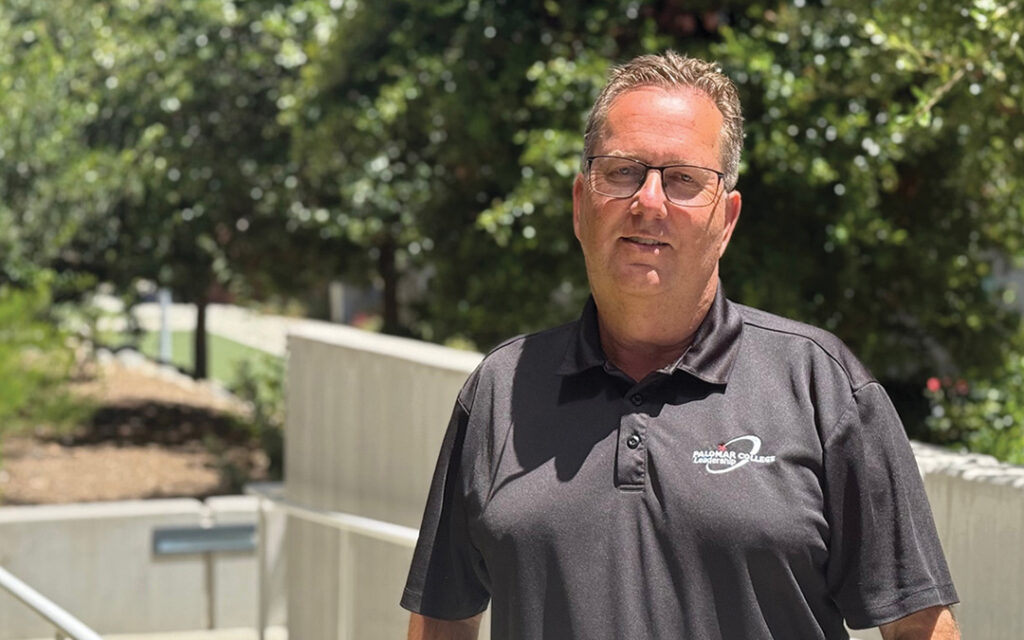
Dennis Astl, the manager of construction and facilities planning at Palomar College, has been selected as a Climate Action Fellow by the California Community College Chancellor’s Office. Climate Action Fellows support the activities associated with the Vision 2030 Climate Action plan.
Astl was one of four community college employees in the state selected for this opportunity and will serve for two years to support statewide-level climate-related work, an effort seeking better ways to address climate change issues.
Each fellow is assigned a specific area of focus. Astl said his group is working to put together resources that will assist community colleges as they seek new and innovative ways to encourage sustainability.
“Instead of working at the district level on how to improve, we are looking at it holistically from a state level, so we have a better chance of tracking statewide on how we are doing,” Astl said.
He said the Palomar Community College District is already taking many steps to become more sustainable, particularly with new construction projects. For example, the new building at the Fallbrook Education Center is designed and being constructed with sustainability at the forefront.
The San Marcos campus is a certified arboretum and botanic garden and also features the district’s first net zero building. Astl has spearheaded the district’s Earth Day events and in 2026 it will be a weeklong event in 2026.
Community colleges across the state are being asked to establish baseline data by the end of 2026 on sustainability components such as how much greenhouse gases their campuses are emitting or how much waste they generate.
Astl said Palomar has already gathered that information and submitted it to the Association for the Advancement of Sustainability in Higher Education, which gave Palomar a bronze rating for existing sustainability practices. Palomar College is one of only five community college districts in California that have submitted their sustainability data.
The state Chancellor’s Office, led by Dr. Sonya Christian, has set a goal of net zero carbon emissions by 2025. Astl said it will be “an extreme challenge” to reach that goal, but he is pleased to be part of work on sustainability statewide.
“It’s important. Climate change is happening, and we should do everything we can to slow it down and mitigate as much as we can,” he said. “It’s the responsible thing to do.”